
Snoring Isn't One Problem. It's Three. Here's How to Find Out Which One Is Stealing Your Sleep.
For two years, I fell asleep angry.
Not at my husband, exactly. At the sound. That low, wet, sawing noise that started the second his head hit the pillow and didn't stop until sunrise. I tried earplugs. I tried going to bed an hour earlier so I'd be asleep before he was. I tried nudging him, rolling him over, the gentle "honey, you're snoring" and eventually the not-so-gentle elbow. Nothing held for more than a few minutes.
The worst part wasn't the exhaustion. It was lying there at 3 a.m. doing the math on whether I could quietly carry my pillow to the couch without waking him, and feeling like something had gone quietly wrong with my marriage.
So I did what I should have done a year earlier. I asked an actual sleep nurse at our local clinic.
She didn't hand me a gadget. She asked me one question I'd never thought about: "When does he snore the worst?"
And then she told me the thing that changed everything. Snoring isn't one problem. It's a symptom, and it has at least three completely different causes. Most people fail to fix it because they're treating the wrong one. The nasal-strip person who actually has a jaw problem. The mouthguard person whose real issue is sleeping flat on their back. Everyone throwing money at random "quick fixes" without knowing which type of snorer they're living with.
But for ordinary, garden-variety snoring, here's the framework she gave me, and what worked for each.
Type 1: The Position Snorer
This was us, partly. She explained that a huge amount of snoring is purely mechanical. When you sleep flat on your back, gravity pulls everything (jaw, tongue, soft tissue) backward and downward, and the airway narrows. A pillow that's too flat or too tall bends the neck and makes it worse. The tell: snoring is loudest when they're on their back and often disappears when they roll onto their side.
The genuine, free tips first:
- Get them off their back. Side sleeping alone can cut or kill positional snoring. The old trick is a tennis ball sewn into the back of a sleep shirt so rolling over is uncomfortable.
- Elevate the head of the bed slightly, or use a pillow that supports a neutral neck angle rather than craning it.
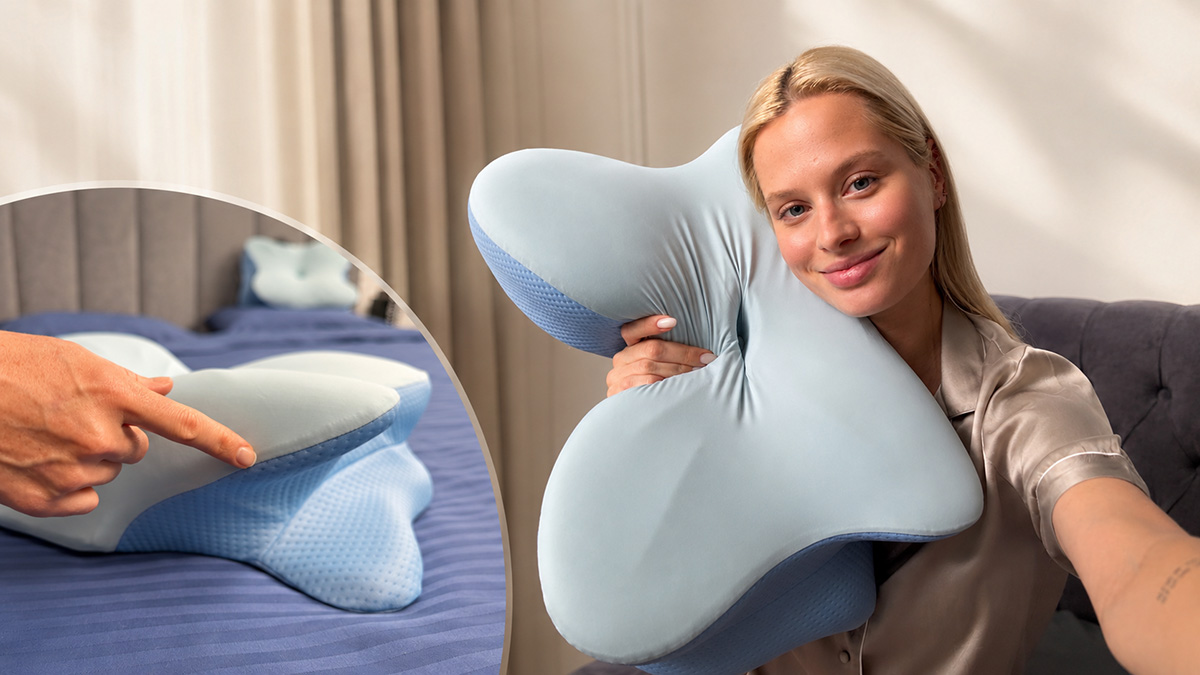
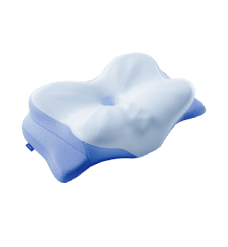
The tennis-ball thing worked, except he hated it and kept taking the shirt off. What actually solved it was the pillow. We'd been using a flat, dead memory-foam pillow that let his head roll straight back every night. The nurse described the shape we needed (something that cradles the head and keeps the neck in line instead of folding it), and I ended up finding the one that matched almost exactly.
The Derila Ergo is an ergonomic memory-foam pillow built around exactly that idea: holding your head and neck in natural alignment so the airway stays open instead of collapsing. The first night he used it, the snoring didn't stop completely. But it dropped to maybe a third of what it was. For positional snorers, this is the cheapest, lowest-effort thing to try first, and for a lot of people it's the whole answer.
Type 2: The Jaw-and-Mouth Snorer
If the snoring continues even when they're on their side, or if they sleep with their mouth hanging open, the cause is usually further down. The nurse explained that for many people the lower jaw relaxes and slides backward during sleep, which lets the tongue and soft tissue fall back and block the throat. That's the rattling, throaty snore.
Free things that help:
- Mouth taping (a small strip to encourage nose breathing) helps some mouth-breathers, though it's worth easing into.
- There are tongue and jaw exercises (mewing, holding the tongue to the roof of the mouth) that can strengthen the muscles over weeks.
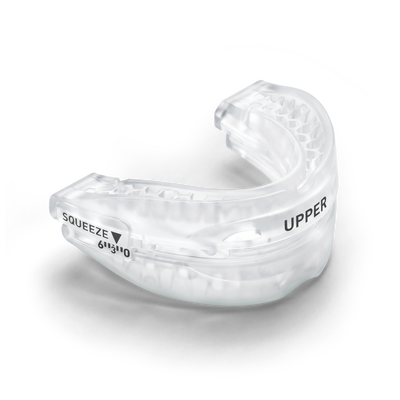
But the direct fix for this type is to physically hold the jaw forward a few millimeters so the airway can't collapse. Dentists make custom devices for this that cost a fortune. The over-the-counter version uses the same principle.
SnoreRX is a boil-and-bite mouthpiece that gently advances the lower jaw and is adjustable, so you dial in exactly how far forward feels comfortable. My brother-in-law is the textbook jaw snorer (mouth open, dead silent on his side, still roaring) and this is what worked for him after the pillow did nothing. If your partner's snore is throaty rather than nasal, and side sleeping doesn't touch it, this is the type they probably are.
Type 3: The Congested, Dry-Tissue Snorer
The third type surprised me most. The nurse said a big share of snoring is about the tissue itself: when the lining of the nose and throat is inflamed, swollen from allergies, or just dried out, it vibrates more and the airway is more crowded. The tell here is a stuffy, nasal quality, snoring that's worse during allergy season, in dry winter air, or after a drink (alcohol relaxes throat muscles and dehydrates you, a double hit).
Free fixes that genuinely matter for this type:
- Run a humidifier in winter. Dry air makes everything stickier and more prone to vibrate.
- Hydrate properly during the day. Thicker secretions cling and rattle.
- Treat the allergies. Antihistamines or a saline rinse before bed clear a surprising amount.
- Skip the nightcap.
When the air and the allergies are handled and they're still congested-snoring, the targeted option is something that works on the tissue directly inside the nose and throat rather than just propping the airway open mechanically.
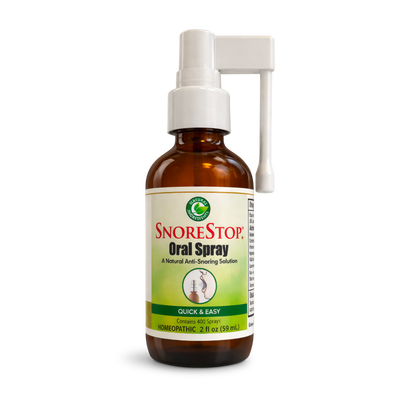
SnoreStop is a natural oral spray developed by a doctor that's formulated to calm the tissue in the mouth and throat so it stops vibrating, applied with a few sprays right before bed. It's the lowest-commitment of the three (no device in your mouth, nothing to fit), which makes it the easy one to start with if your partner's snore is the wet, congested kind.
How to actually use this
The honest answer the nurse gave me is that some people are more than one type, and the real fix is matching the solution to the cause instead of guessing. For us it was mostly position plus a bit of congestion, so the pillow did most of the work and the spray cleaned up the rest. My brother-in-law was a pure jaw case and needed the mouthpiece.
Figure out which sound you're living with:
- Worst on his back, better on his side → start with the pillow.
- Mouth open, throaty, doesn't care what position → the mouthpiece.
- Stuffy, nasal, worse in winter or after a drink → the spray.
I sleep through the night now. Not because I found one magic product, but because I finally stopped treating snoring like a single thing and started treating the actual cause. If you're reading this at 3 a.m. with your pillow over your head, start with your type above. It's the closest thing to a quiet bedroom I know of.
Which snorer are you living with?
Match the right tool to the right type.
P.S. If you only do one thing tonight, get them off their back. It's free and it works more often than people expect. If that isn't enough, the difference between a quiet bedroom and another exhausted morning is usually just matching the right tool to the right type.
Reader questions
No. These reduce or stop the noise for ordinary snoring by addressing a likely cause (position, jaw, or congested tissue). They are not medical treatments and they don't cure anything.
If breathing stops, gasping, or choking is involved, that needs a doctor, not a device.
Common. Plenty of people are mostly positional with a bit of congestion, or a jaw snorer who is worse in allergy season. Start with the strongest tell, see how much it helps, and layer the second only if you still hear the other sound.
There's an adjustment period of a few nights. Because SnoreRX is adjustable, you can start with the jaw barely advanced and move it forward over a week as it stops feeling strange.
SnoreStop is made for nightly use before bed. As with anything you take regularly, read the label and check with a pharmacist or doctor if you're pregnant, nursing, or on other medication.
Snoring is the noise. Apnea is when breathing actually pauses, often with gasping or choking, and daytime exhaustion that sleep doesn't fix. If that sounds familiar, see a doctor before trying any of this.
These options help with ordinary snoring, not sleep apnea or any other medical condition. If your partner gasps, chokes, or stops breathing during sleep, see a doctor. Nothing here diagnoses or treats any condition.
Reader discussion
12 comments · open threadHonestly almost cried the first quiet night. Two years of earplugs and me doing the 3am math on sneaking to the couch. Got the pillow and the snoring dropped by more than half the first night?? Wish I'd done this ages ago.
Yeah I'm the mouth-open kind, dead silent on my side but my wife says I still roar lol. Pillow did nothing for me tbh. The mouthpiece was the one. Felt weird for like 4 nights then I forgot it was even in.
Good call-out on the adjustment period, Dev. That's where a lot of people quit too early.
Mine is 100% the congestion one. Always worse in winter and after wine, which I never connected until now. Humidifier plus the spray and I'm basically fine. The allergy thing was the missing piece for me.
Ok I never trust these ad articles but my ENT explained it almost the exact same way. Position, then the jaw and tongue thing, then the tissue stuff. So credit where it's due I guess.
Lol the tennis ball shirt. We actually tried that and he kept ripping it off in his sleep too. The pillow actually stuck though.
Same exact thing happened here.
Thank you for the part about sleep apnea. My dad's "snoring" turned out to be apnea and he needed an actual sleep study and a machine. Glad this didn't act like a spray fixes everything.
Started with the pillow since it was the cheapest thing to try. Got me maybe 60% there. Added the mouthpiece for the nights I end up on my back anyway and now it's quiet. Worth it.
The 3am math about sneaking to the couch hit way too close to home. Three weeks on the pillow now and I haven't left my own bed once. Small thing but it means a lot.
Wish it said how long the mouthpiece actually lasts before you replace it. But the type breakdown genuinely helped, turns out my husband is the jaw one, not position like I assumed.